
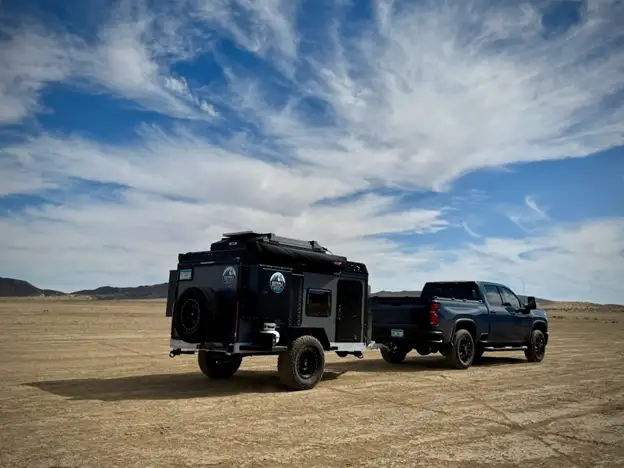
DIY camper conversions have exploded in popularity in recent years. Hop on social media, and you’ll find plenty of van builds, cargo trailer makeovers, and former school buses transformed into rolling homes.
While there's a certain romance to doing it yourself, the truth is this: when it comes to rugged terrain, backcountry durability, and long-term performance, a DIY setup rarely holds a candle to a purpose-built off road camper.
That’s where engineering meets adventure.
Let’s explore how a professionally built extreme off road camper trailer—like our very own XTR-10 and XTR-6 trailers—stack up against a DIY camper conversion. We’ll focus on the four most critical factors: durability, weight, suspension, and performance. If you're planning to take your rig far off the beaten path, this is the guide you’ll want to read before pulling out the toolbox!
Most DIY conversions start with a trailer or RV that was never intended to leave the pavement. Whether it’s a cargo trailer, retired travel trailer, or old van, these platforms weren’t engineered to handle the rigors of washboard roads, rocky trails, or river crossings.
These builds can look beautiful parked at a trailhead—but take them on a serious overland route, and things start to rattle, shift, and crack.
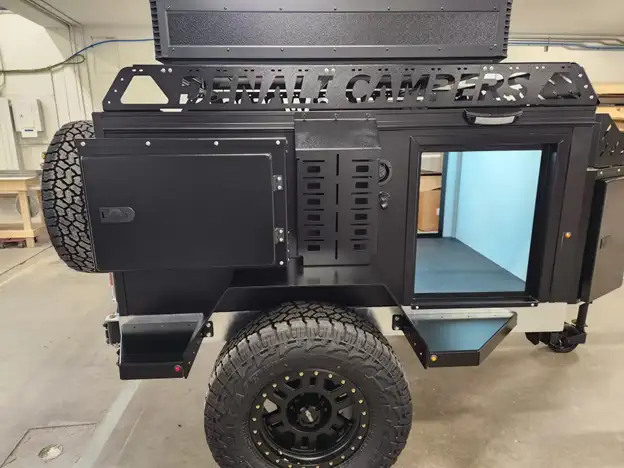
But trailers like the our XTR-10 are designed from the frame up to withstand the abuse of off-road travel. With an engineered frame and fully enclosed components, it’s built to keep going long after a converted RV gives the XTR-10 the walls, cabinetry, and fasteners are designed with trail vibration in mind—not just highway cruising.
The more compact XTR-6 doesn’t cut corners in the durability department, either. It’s engineered with a monocoque structure that holds up to tough trails, wet weather, and temperature swings. Every material is chosen for strength, not just appearance.
A good off road camper doesn’t just look tough—it performs under stress. Fasteners, joints, and welds should all be field-proven and reinforced, not borrowed from big-box cabinetry.
DIY builders often underestimate how much weight they’re adding—and where they’re putting it. Home-style fixtures, heavy plywood, and overbuilt storage systems can turn a basic trailer into a tow-heavy liability. This not only affects drivability but puts dangerous stress on your tow vehicle and suspension system.
A heavy, unbalanced trailer is a recipe for poor handling, reduced fuel efficiency, and limited access to remote locations.
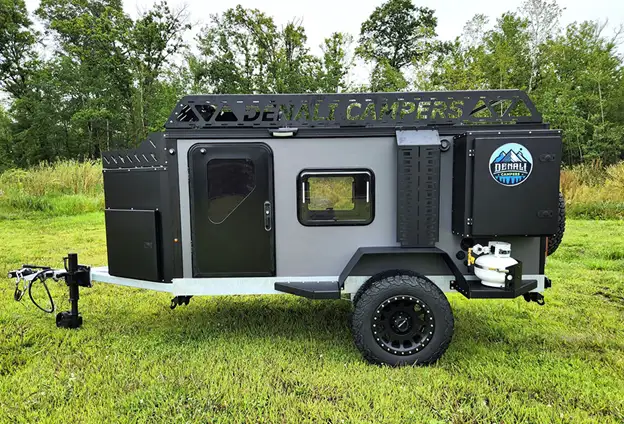
The XTR-10 and XTR-6 are designed to be lightweight but structurally sound. Materials like aluminum and powder-coated steel are used where strength is essential, but unnecessary bulk is avoided. Battery systems, water tanks, and gear storage are carefully placed to preserve balance and handling.
That means you get better trail maneuverability, easier towing, and less wear on your vehicle, which is especially critical for long-distance expeditions. Weight isn’t just about towing—it's about recovery. If you ever need to winch out, cross a stream, or change a flat, lighter is better.
Suspension is the unsung hero of any expedition trailer. It's what lets your trailer follow your vehicle across technical terrain, keeping your gear secure and your tires in contact with the ground.
DIY trailers might roll fine on gravel, but introduce deep ruts or uneven rocks, and you’re risking axle failure—or worse.
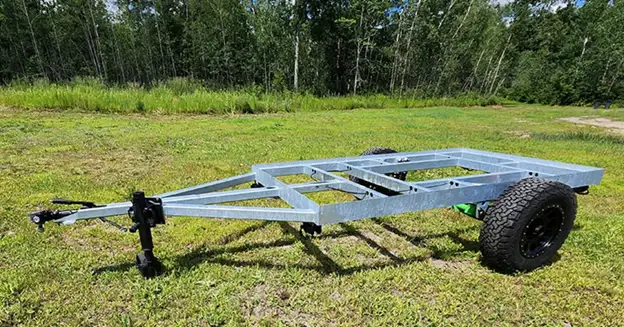
The XTR-10 features a true independent suspension system with long-travel articulation. Combined with off-road tires, this gives you unmatched trail performance, absorbing shocks that would crack or misalign a standard RV axle.
The XTR-6, despite its smaller footprint, uses the same proven suspension platform, ensuring it’s just as capable in the backcountry as its bigger sibling. Whether you're crawling over rocks or descending loose gravel, these systems keep the trailer stable, balanced, and secure. A good suspension doesn't just prevent damage—it keeps your trailer from becoming an anchor on difficult terrain.
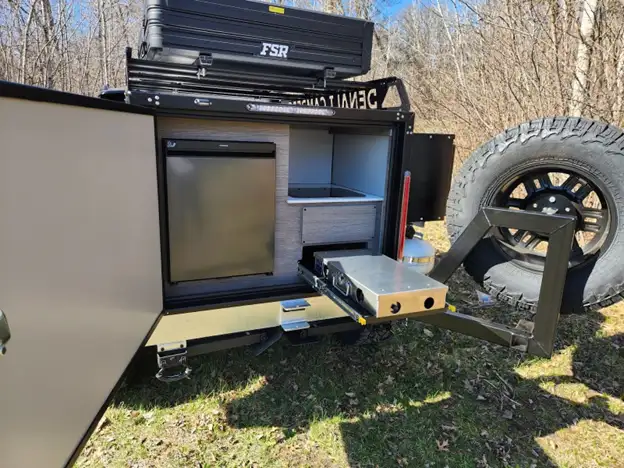
"Performance" in the off-road world doesn’t mean horsepower—it means how well your trailer helps you survive and thrive off the grid. Power systems, water storage, insulation, and weatherproofing all play a role.
You may find yourself constantly managing systems that don’t communicate well—or worse, that fail under pressure.
Both the XTR-10 and XTR-6 are engineered with real-world usability in mind. From solar-ready electrical systems to modular galleys, everything is designed to work together. Our trailers come prepared with features like:
Everything is thought through—because these campers weren’t designed in a parking lot; they were refined in the field. A camper should disappear into the background of your trip, not dominate your time with troubleshooting. That’s the difference engineering makes!
Here’s one more factor that often gets overlooked: resale value. A professionally engineered camper from a trusted brand holds its value better than a one-off DIY build, no matter how clever.
Our XTR trailers are backed by a reputation for quality and are built to meet customer expectations for longevity. That means peace of mind—both while you own it and when it’s time to sell or upgrade.
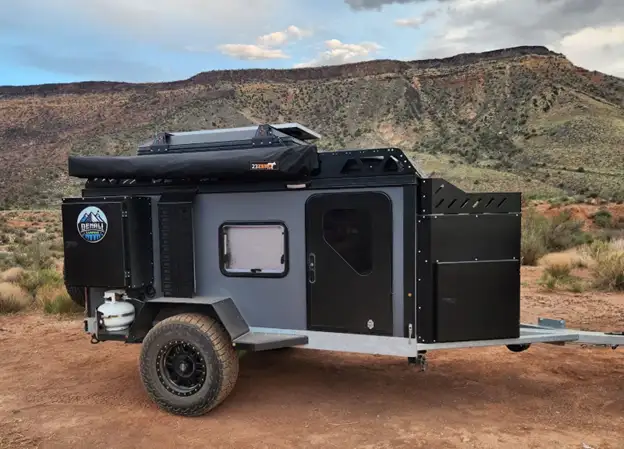
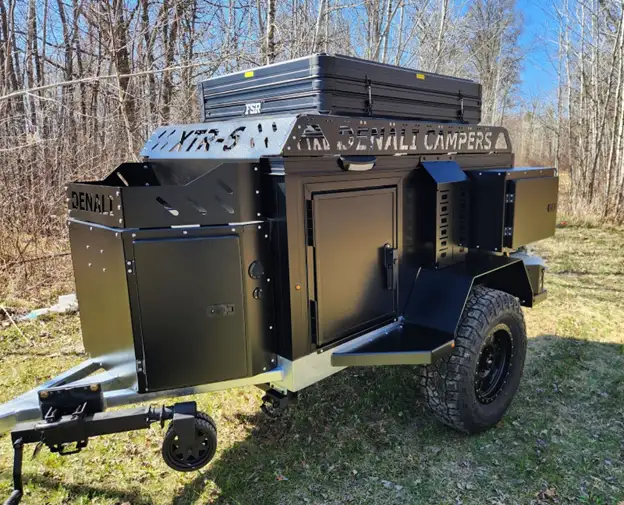
DIY campers can be creative, personal, and budget-friendly—but they often fall short when it comes to tackling real trails and wild terrain. If you're sticking to campgrounds or paved roads, a converted van or trailer might do the trick.
But if your goal is to explore remote deserts, alpine passes, and muddy forest trails, nothing compares to a purpose-built off road camper.
With the Iron Peak XTR-10, you get a full-featured platform ready for extended expeditions. For a more compact option, the Iron Peak XTR-6 offers impressive capability in a smaller footprint that’s perfect for solo explorers or couples looking to travel light and smart.
Our trailers aren’t just built. They’re engineered—from the frame to the finish—to go farther, last longer, and take you places a DIY rig just can’t reach. If you’re inspired to go further, reach out to us today, and we’ll help you decide if the XTR-10 or XTR-6 is the better fit for your needs.